
By: Aaron Turner, San Francisco Storyteller

When I first met Chef Nelson German and his wife May, it was to interview for a bartending position at their flagship restaurant and bar, alaMar in April of 2022. At the time, I was bartending full time, and despite my pre-pandemic filmmaking career being derailed by the world-changing pandemic, I was grateful to simply be working again after first surviving the boredom and fear of COVID quarantine, then gradually working in spaces that weren’t fully open yet for indoor dining and drinking. Still, I had been struggling to make enough money to feel financially comfortable, having just moved in with my then girlfriend, now wife, into our first shared apartment together less than a year prior, and knowing just how expensive life in the Bay Area is.
Things were finally feeling a bit more back to normal as COVID numbers began to gradually lessen, and the infection rate stabilized a bit more, allowing bars and restaurants to finally be free of any restrictions and be fully open to guests once again. Although I had over a decade of bartending experience heading into being hired at alaMar, my time there really helped shape who I am now as a professional, and allowed me so much personal growth. I was able to have a hand in nearly everything service related, as well as helping to conceptualize and craft multiple Dominican-inspired cocktails that have since become best-sellers and Oakland cocktail favorites.
Not only did I find a place to work in that provided enough money to breathe a little easier, I had also found a home and a family that empowered me to be that much better prepared for the role I now am fortunate to find myself in today: with True Story and Saga Spirits Group, helping Kentucky Bourbon Hall of Famer and master distiller Wesley Henderson grow a new legacy brand.
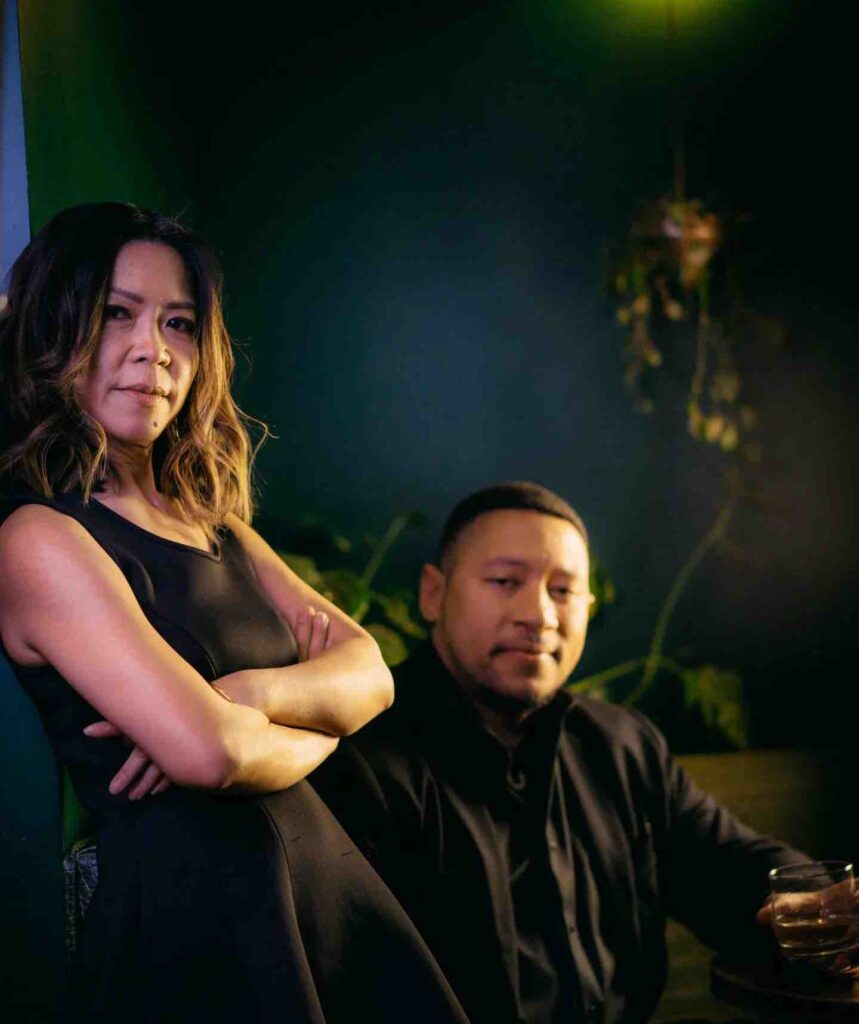
When I first started working there, alaMar, in Oakland’s Uptown neighborhood, was a fusion concept, serving food that appealed to both the Southern American pallet, with Latin Caribbean and Dominican influences sprinkled in. Seafood boils were popular and there were often lines out the door for their famous Dominican style crab boils in particular. Nelson, who was born and raised in the vibrant, bustling, working class and predominantly Dominican Washington Heights neighborhood in New York City, opened alaMar with his Oakland-raised wife May German over a decade ago. Eventually, the concept shifted and in the last couple of years was rebranded as alaMar Dominican Kitchen, featuring the West Coast’s only authentic Dominican food and cocktail menu, an homage to Nelson’s family’s cooking he remembers so fondly.
Following a successful number of years with alaMar, Nelson decided to expand his vision, and opened the very-well hyped Sobre Mesa, an Afro-Latin Carribean cocktail lounge and kitchen less than a mile away from his first restaurant. The only slight issue? The grand opening was in February 2020, less than a month before the entire world shut down due to the aforementioned COVID pandemic.
Although meeting these challenges was extremely trying and at times overwhelming, Nelson, his wife, and a variety of different staffs, managed to keep alaMar open and serving food during the height of the pandemic, even offering discounted or sometimes even free food to those affected by the strict California shutdowns the most. All the while, he and his investors were able to keep Sobre Mesa funded long enough to finally reopen over a year later.
Despite his background as a trained chef, Nelson took it upon himself to learn just as much about mixology and how to pair spirits with fine dining, telling a personal and intimate story with each dish or cocktail he puts in front of you. He now also co-owns and helped recently open Meski, his third restaurant, an Ethiopian and Latin fusion restaurant and cocktail bar in downtown San Francisco, with two other co-owners, including future NBA Hall of Famer and Golden State Warriors forward Draymond Green.
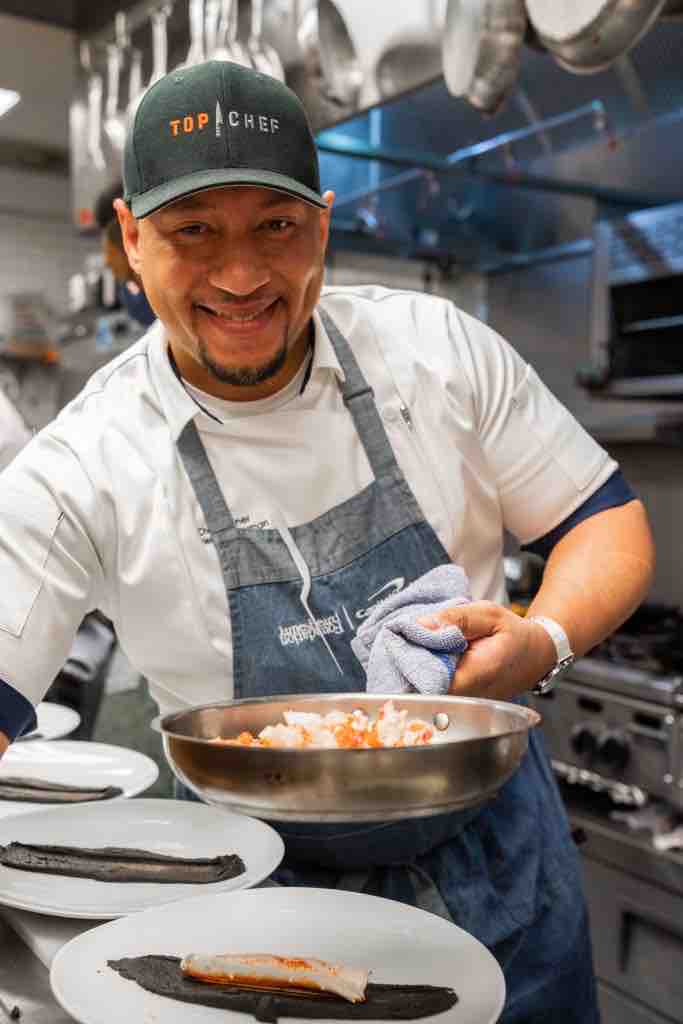
Even though Nelson admits he grew up feeling rather shy and introverted, he now thrives in sharing personal stories and inspirations for everything he creates, while making guests, friends, and neighbors feel at home in any of the spaces he owns. He even appeared on season 18 of Bravo’s Top Chef, making a reality TV star yet another one of his personal achievements.
On a cold, rainy night in Oakland this week, I sat down with Nelson inside the sultry and always vibey lounge area of Sobre Mesa and discussed his family’s relationship with food and gatherings, his first ever kitchen job, finding a balance to work and life, and, now most importantly, being a new father.
AARON:
What is your earliest memory involving food and preparing food that you can remember?
CHEF:
Just watching my mom and grandma when I was young, I would be fascinated by watching them cook. I wouldn’t really go into the kitchen. It was always kind of taboo, at that time, for a man to be in the kitchen, but, I was always fascinated, like, ‘I wanna do that, that looks fun, I wanna help out.’ So, I would watch my mom cook one of my favorite dishes, braised chicken or pollo guisado, which we serve at alaMar. Also, braised oxtail, rice and beans, all those beautiful Dominican classics.
The first time I really got in there though, in the kitchen, and started doing things, was when my parents would leave the house to go shopping. I would just start experimenting with things, probably around the age of 11 or 12. Nothing crazy, making sandwiches, making a burger here and there, I wasn’t making any braises yet or anything like that, but it was still fun, and I knew there was a connection there. So, I initially saw it as a hobby, as opposed to a passion. Then I just got more into it and wanted to try things out and experiment, probably around the age of 17, 18, I started getting slightly more serious about it, and I wanted to try something other than just making a sandwich or spaghetti. I would just kind of test things out and have my friends taste things. So, it just grew and grew, this connection to cooking.
AARON:
What were gatherings like in your family and culture growing up, specifically around food and drink?
CHEF:
Gatherings were everything to us, honestly. With Dominicans, we gather sometimes every weekend, or at least once or twice a month. Get together, play dominoes, eat a lot of food, drink. I would watch the elders party it up, dance a little bit, and it was always fun to just get together and live life. No matter what’s happening, people would just be going on about their week, talk about life, and what’s going on, but just that coming together was always special, and it was always centered around food and drinks.
We call it chencha in the Dominican Republic, just a gathering of friends and family. Even though it’d be a family thing, you would invite your neighbors to come party and get them to meet your family, and it was always a great time. To this day, I always enjoy bringing people together. I don’t get to do it as often anymore of course, since I’m always working, so I get to do it in the spaces I run, and it’s kind of a party for us here, but there’s always that gathering atmosphere and mentality of bringing the community to just live life together.
AARON:
Describe your first paid culinary position, where it was, and what led you to it?
CHEF:
Coming out of culinary school, there was a restaurant called Citarella, run by Joseph Citeralla, in Midtown, New York City. It was a New American restaurant, huge, sat about 250 people. I was walking around with my resume, coming out of school, just trying to get a job, and they accepted me, or tried me out. I was doing hot appetizers, which is crazy looking back. Coming out of school, you usually go garde-manger, making salads. It’s kind of the easiest, quicker thing, and you’re not really playing with fire much. For some reason, they put me in hot appetizers, and it was a crazy experience, because that’s the first thing everybody has, an appetizer. Crab cakes, lobster risotto, we had these fried arancinis, there were so many things in that station, and it was a two-man station, so you had to be part of a team, but I really appreciated that. Even though I stepped into other positions and later came back to do garde-manger, it was that first rush of like, oh you’re really meant for this, and for me, I loved it. As hard it was, getting yelled at, and not doing everything right every time, I was working side by side with somebody, and getting that teamwork and learning how to work with others, while also seeing the rush of a restaurant.
This first paid position was $7 an hour back then, minimum wage in New York, working long hours. You’d come in early in the morning, start prepping, and then you’re cooking lunch service, sometimes a dinner service. It was really fun. I eventually got to move to other positions and learn different things, but that restaurant shaped me in learning technique, and really learning how to work with a team around you.
AARON:
What was the experience and process like with opening up your very first restaurant, alaMar?
CHEF:
Opening alaMar was definitely a lot. It was a dream come true for me, but I got to learn firsthand how long of a process it is; from just first looking for a space, to negotiating for a lease, to finally getting the keys. Then, the work starts, where you have to build your kitchens, you’ve got to build the bar, and you’ve got to build the way you want the restaurant to look and feel for the guests.
Then, when you add the permitting process, that’s a long process too. You’re dealing with the city, the government, and trying to get funding too, whether it’s through investors, friends and family, or loans. We did a crowd-funding, too, to help with the patio. So, it was a long haul, and it took us about 8 months to really get things done. The process is so long that you’re running out money. So, you either have to keep fundraising, or you’re rushing to open.
Even though it’s tedious, there’s an appreciation for how hard it is to open up a business in any industry, and you have to realize how you have to be ready for that. It’s not just you opening right away and now you’re making money. It really teaches you to have patience, to be organized, and just be ready for anything.
AARON:
At what point did you start to also focus on creating cocktails as well as creating the food menus?
CHEF:
Being a business owner, you have to do it all sometimes, and you have to jump in there, whether it’s dishwashing, electrician, plumbing, or bartending. For me it was a Friday night, somebody had quit, and I had a good staff in the kitchen, but we had no bartender, on a Friday, which we needed. So I was like, ‘I just gotta do it, I gotta get in there and try it out.’ I never bartended before, aside from making simple drinks for friends at a party, but I really fell in love with it, honestly.
I got back there, and it was nerve-wracking for sure, but I really fell in love with the artistry behind it, and it made me appreciate even more the people behind the bar and what they go through, the thought process, and also the intention. You’re speaking to the guests, and there are guests in front of you while you’re making the product, and that’s not an easy feat. You don’t have a barrier where you’re just focusing on making drinks, like in a kitchen. I felt it was like cooking, so I felt the love for it, and I wanted to learn more. So, I would be behind the bar the next few weeks, continuing and continuing for months and just having fun with it and learning the craft, while getting more respect for it.
It helped me be the kind of person I am now, where I’m more open to talking and telling stories. I was always shy growing up, even when I was first working in this industry. So, it made me better prepared for speaking engagements and all that.
AARON:
Did you think your experience with learning mixology and having to bartend help make Sobre Mesa what is now?
CHEF:
Absolutely. I think that really was the inspiration behind it. I really fell in love with it so much that I started to do more research and development, started with working with bartenders from other places, trying to learn the craft as much as I can. I started traveling, visiting places like Cuba, where there’s a great cocktail scene, and other cities in other states. Just really digging in deep into the craft. When you’re cooking as a chef as long as I’ve been doing it, you can get to a point where you own your own businesses and you can start to get complacent. The menu’s maybe not changing as often, because you have your staples, and you can kind of get bored a little bit. So, you try something new, you fall in love, and you’re invigorated again to keep going. For me, it was making cocktails, and learning they coincide with each, cocktails and food. It really tells a deeper story.
AARON:
Now that you run three different businesses and are also a new father, how do you and your wife manage your day-to-day time and are you able to have some kind of work/life balance?
CHEF:
Man, it’s learning every day. You learn something new every day. I’m finally getting to learn how to juggle things better, because my main focus now is giving time to my baby. Being a brand new dad is a blessing for me and it’s taken us a long time to get to this point, growing our businesses and growing our careers, which is why we waited so long to be parents. We want to make sure we’re at a great point in our lives where we will have time for a baby, to give him his due time, and all the love that we can give him. So, for me, now I see alaMar doing well, and Sobre Mesa rocking again after COVID.
Meski came along out of a whim, and that opportunity I just couldn’t pass up. I had told myself, if I’m going to open something new it’s going to be years and years later, but it was something I just couldn’t pass up. It was more of a consulting thing at first, and then it became a partnership because we learned how to be around each other and became a family.
However, my baby Mason really changed my mindset in terms of how to keep living my dream, but to do it the right way. Invest in a team more than anything, and invest in the systems. It’s like having a distillery, you have to have that team to create the products well, and trust the process, trust everything and everyone around you. It’s going from wanting to touch everything, see everything, be around every minute, to now learning how to make things so tight and proper, where the systems are so easy to follow. It’s getting a team that’s invested in the concept, who really believes in it, and they want to make sure everything’s right. Now, I don’t have to be there every day.
Learning how to trust my team and let things be is a hurdle I have surpassed now. I think we all learned from COVID that you have to be ready for anything that comes your way.